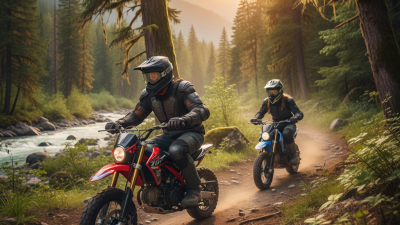
Choosing among the 2026 top Enduro Motorcycle types requires more than comparing engine size or showroom styling. Buyers should examine terrain, riding experience, maintenance access, and realistic spending limits. A lightweight two-stroke may feel lively on rocky climbs, while a four-stroke can offer smoother traction on longer forest routes. Electric models also deserve attention, especially for riders who value quiet operation and simpler routine maintenance.
No single type wins every trail.
This guide compares the practical strengths and compromises behind current Enduro Motorcycle categories. It considers suspension behavior, fuel range, battery planning, seat height, service intervals, and low-speed control. Those details matter when a muddy boot slips beside a steep rut or when a remote trail lies far from a workshop. Manufacturer specifications provide a useful starting point, but real-world impressions can differ with rider weight, tire choice, weather, and setup.
That uncertainty matters.
A buyer should test controls, inspect dealer support, and ask how parts are supplied locally. Experienced riders may prioritize suspension adjustment and power delivery, while newer riders often benefit from manageable weight and predictable throttle response. Some popular recommendations sound convincing, yet they may ignore comfort or transport costs. This comparison aims to remain practical and balanced, using published specifications alongside common ownership considerations. The best 2026 choice is not necessarily the fastest motorcycle; it is the one that fits the rider, route, and maintenance habits without creating avoidable surprises.
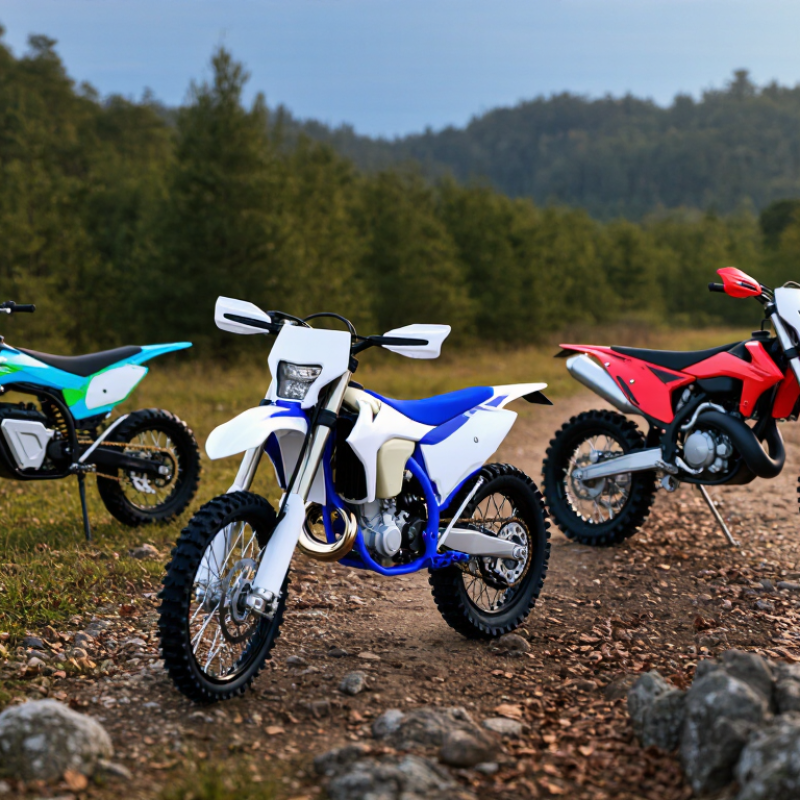
Enduro motorcycles are built for timed special tests, rocky climbs, forest tracks, and long sections between them. They usually combine light frames, long suspension travel, narrow seats, strong ground clearance, and responsive engines. Their role in 2026 is broader than racing. Riders use them for technical trails, weekend training, and controlled backcountry exploration.
The category remains confusing. A tall dual-sport motorcycle may look similar, but it often carries more weight and softer suspension. A true enduro machine prioritizes agility when the front wheel meets roots, loose stones, or a steep ledge. That difference becomes obvious after several hours. Your wrists feel it. Your boots feel it.
Research and Markets’ 2024 off-road motorcycle assessment forecasts roughly 6% annual market growth through 2029. The Motorcycle Industry Council’s recent U.S. sales reporting also shows continuing demand for off-highway motorcycles. These figures suggest a healthy buyer pool, but they do not guarantee a perfect fit. A competition-focused model may frustrate a commuter. A heavier trail model may punish a rider on tight terrain. Buyers should inspect suspension setup, seat height, maintenance intervals, fuel range, and legal trail access. I would not choose by engine size alone. That shortcut still causes expensive mistakes.
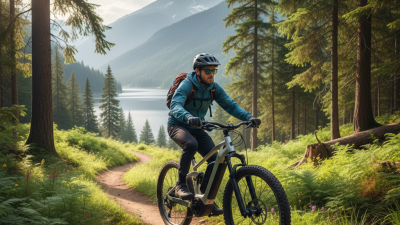
Choosing among the main enduro motorcycle types starts with the riding environment. Dual-sport models combine road equipment, softer suspension, and longer service intervals. They suit commuters who occasionally tackle gravel, forest tracks, and shallow streams. Trail-oriented enduros feel calmer at low speed, with broader seats and smoother power delivery. They are less tiring during a three-hour weekend ride.
Hard enduro motorcycles prioritize low weight, high ground clearance, and strong traction on rocks, roots, and steep climbs. Their compact fuel tanks and firm suspension can feel demanding on public roads. Cross-country enduro models sit between trail bikes and competition machines. They usually offer sharper throttle response, closer gear ratios, and suspension tuned for fast dirt riding. However, lighting equipment and road approval may vary by market. FIM Enduro technical regulations separate competition classes by engine capacity, showing why engine size alone cannot define a buyer’s choice.
Industry data needs careful reading. The ACEM Motorcycle Industry in Europe 2024 report groups registrations broadly, rather than separating every enduro subtype. The Motorcycle Industry Council’s 2023 Owner Survey also highlights different riding uses, but buyer expectations remain highly individual. A lighter motorcycle may be better in mud, yet a heavier dual-sport can feel safer on pavement. That trade-off is easy to underestimate. Check local registration rules, suspension setup, seat height, parts access, and scheduled maintenance before purchase. A specification sheet never shows how exhausting a rocky climb can become.
Choosing a 2026 enduro motorcycle starts with the terrain, not the engine badge. A lightweight 125–250cc model suits tight forest tracks, steep switchbacks, and riders who value quick recovery after a mistake. These bikes feel less tiring when the trail becomes technical. They also encourage better clutch control and smoother body movement. Weight changes everything.
A 300–450cc motorcycle offers a useful middle ground for mixed conditions. It can handle rocky climbs, open dirt roads, and longer trail sections without feeling excessive. Four-stroke engines usually deliver predictable traction and steady power. Two-stroke engines often feel lighter and more responsive, but they can demand sharper throttle control.
Test both if possible. Seat height, suspension setup, and fuel range may matter more than peak horsepower.
For fast desert routes, high-altitude trails, or carrying extra equipment, a 450–500cc model provides strong torque and stability. However, more power can punish poor line choices and increase fatigue. Experienced riders may manage it well, while newer buyers might progress faster on a smaller motorcycle.
I once assumed bigger meant better, but difficult terrain changed my view. A machine that feels exciting for ten minutes may feel heavy after three hours. Check service access, suspension adjustability, and local riding requirements before deciding. Personal comfort remains an imperfect measurement, but it is still valuable.
Choosing among the 2026 top enduro motorcycle types starts with suspension, not engine size. Lightweight two-stroke models often feel agile on rocky trails and tight turns. Four-stroke models usually deliver steadier traction on long climbs. Dual-sport designs add road equipment but may feel heavier off-road. A useful suspension setup needs correct sag, rebound, and compression for your weight. Factory settings are only a starting point.
Technology can improve control, but it should not replace riding skill. Selectable engine maps, traction control, and electronic suspension may help on changing surfaces. However, extra systems can increase diagnostic complexity and repair costs. Comfort also matters during six-hour rides. Check seat firmness, handlebar reach, footpeg position, and vibration. I have chosen aggressive specifications before and regretted them after a full day. A test ride remains more trustworthy than a brochure.
Tips: Inspect fork seals, linkage bearings, brake pads, and chain access before buying. Ask for the service schedule and typical parts costs. Carry a flashlight and examine frame welds, fasteners, and coolant traces. Keep a maintenance log after every ride. Small issues become expensive when ignored. If two models perform similarly, choose the one you can service confidently and support with local expertise.
This category-level benchmark compares common 2026 enduro motorcycle types on a 1–10 scale. Competition models generally provide the longest suspension travel and sharpest performance, while trail-oriented and street-legal motorcycles prioritize comfort, versatility, and simpler ownership. Scores are representative of typical category characteristics and can vary by model.
Choosing the Right 2026 Enduro Motorcycle for Your Riding Goals
The best 2026 enduro motorcycle depends on where you ride, not just engine size. Lightweight trail enduro models suit tight woods, steep climbs, and slow technical sections. Their narrow seats and responsive suspension reduce fatigue after several hours. Hard-enduro motorcycles offer stronger protection and specialized suspension for rocks, roots, and deep ruts. They can feel demanding on open roads.
For mixed pavement and dirt, consider a street-oriented dual-sport enduro. These motorcycles usually provide longer service intervals, practical lighting, and stable handling at moderate road speeds. However, their added equipment can increase weight on difficult trails. A competition-focused model may climb more confidently, but frequent oil changes and air-filter cleaning become part of ownership. Check the maintenance schedule carefully.
Your height, riding experience, and transport options also matter. Sit on the motorcycle with both feet near the ground. A manageable stance builds confidence during awkward stops. During a test ride, notice how smoothly the clutch engages and whether the suspension absorbs sharp edges. Small details matter. I once chose a lighter motorcycle for technical trails, then discovered its seat became uncomfortable during longer transfers. That mistake changed how I evaluate comfort. Read independent test reports, inspect parts availability, and ask experienced mechanics about local service support. A perfect specification sheet cannot replace a motorcycle that fits your body, terrain, and realistic maintenance habits.
| Enduro Motorcycle Type | Typical Engine or Power Class | Typical Wet Weight Range | Common Wheel Configuration | Best-Terrain Profile | Key Advantages | Main Trade-Offs | Best For |
|---|---|---|---|---|---|---|---|
| Lightweight Two-Stroke Enduro | Approximately 125–300 cc; compact engine with strong power-to-weight performance | About 95–110 kg | 21-inch front and 18-inch rear | Technical single-track, steep climbs, tight woods, and challenging low-speed sections | Low mass, quick throttle response, simple engine layout, and easy maneuverability in difficult terrain | More frequent throttle and clutch control; two-stroke power delivery can feel abrupt; limited highway practicality | Riders who prioritize agility, technical trail control, and competition-style performance |
| Lightweight Four-Stroke Enduro | Approximately 250–350 cc; smooth torque with predictable engine braking | About 105–115 kg | 21-inch front and 18-inch rear | Mixed single-track, forest trails, rocky climbs, and moderate-speed off-road riding | Tractable power, strong traction, predictable response, and less demanding power delivery than many two-strokes | Usually heavier and mechanically more complex than a comparable two-stroke; engine braking may require adaptation | Developing riders and experienced trail riders seeking a balanced competition-oriented motorcycle |
| Midweight Four-Stroke Enduro | Approximately 400–500 cc; high torque and strong acceleration | About 108–120 kg | 21-inch front and 18-inch rear | Fast open trails, sand, long off-road loops, fire roads, and varied terrain | Broad powerband, strong hill-climbing ability, high-speed stability, and good versatility for skilled riders | More physical effort in tight terrain; greater heat, traction, and throttle-management demands | Experienced riders who need both technical capability and strong performance in faster terrain |
| Large-Bore Four-Stroke Enduro | Approximately 500–650 cc; high-output single-cylinder configuration is common | About 115–135 kg | 21-inch front and 18-inch rear | Open desert, wide gravel routes, deep sand, high-speed trails, and long hill sections | Very strong torque, excellent open-terrain speed, and the ability to carry additional equipment or fuel | Heavier feel, greater fatigue in tight trails, stronger engine braking, and less forgiving throttle response for beginners | Highly experienced riders who mainly ride open terrain and want maximum four-stroke torque |
| Extreme Enduro Motorcycle | Usually 250–300 cc two-stroke or 250–350 cc four-stroke configurations | About 100–115 kg, depending on equipment and fuel load | 21-inch front and 18-inch rear; specialized tire and protection setups are common | Rock gardens, log obstacles, ravines, wet roots, very steep climbs, and low-speed trials-like sections | Strong low-speed control, enhanced cooling and protection, durable suspension components, and obstacle-focused setup | Specialized ergonomics and gearing can reduce comfort on roads and long transport sections; demanding for inexperienced riders | Advanced riders participating in hard-enduro events or regularly riding severe technical terrain |
| Trail-Oriented Enduro | Approximately 200–450 cc; tuned for tractable power and recreational durability | About 110–140 kg | Usually 21-inch front and 18-inch rear; some smaller models use a 19-inch front wheel | Recreational forest trails, moderate rocks, farm tracks, and mixed-surface off-road routes | Manageable power, comfortable ergonomics, broad usability, and generally easier ownership for recreational riders | Suspension and components may be less competition-focused; additional weight can be noticeable in difficult obstacles | Newer riders, recreational users, and buyers who value controllability over maximum race performance |
| Street-Legal Dual-Sport Enduro | Approximately 250–650 cc; designed to combine road legality with off-road ability | About 125–175 kg, depending on equipment, fuel capacity, and displacement | Commonly 21-inch front and 18-inch rear | Road connections, gravel roads, light trails, overlanding routes, and moderate off-road terrain | Road registration, lighting equipment, longer range, practical maintenance intervals, and strong everyday versatility | Usually heavier and less suspension-focused than competition enduro motorcycles; road equipment can limit technical performance | Commuters, adventure travelers, and riders who need one motorcycle for both public roads and dirt routes |
| Electric Enduro Motorcycle | Battery-electric powertrain; performance varies by battery capacity, motor output, and riding mode | Approximately 90–125 kg for many off-road-focused designs | Usually 21-inch front and 18-inch rear | Short technical rides, private trails, training areas, and locations where low noise is important | Near-silent operation, instant torque, no clutch shifting, and reduced routine powertrain maintenance | Range changes significantly with terrain and riding style; charging time, battery replacement cost, and public-road availability must be checked | Riders with convenient charging who prioritize low noise, simple controls, and short-to-medium off-road sessions |