Leave Your Message

How to Choose the Best Electric Dirtbikes for Global Buyers

Choosing the best Electric Dirtbikes requires more than comparing top speed and battery size. Global buyers face different terrains, climates, road rules, and after-sales networks. A bike that performs well on dry California trails may struggle in humid Southeast Asia or at high mountain elevations. Real-world conditions matter.

The International Energy Agency’s Global EV Outlook 2024 reported that electric two- and three-wheelers represented more than half of new sales in China during 2023. This signals strong market acceptance, but adoption varies widely by country. BloombergNEF’s 2024 Battery Price Survey also placed the average lithium-ion battery pack price at 115 dollars per kilowatt-hour. Battery economics are improving, yet replacement costs remain important for buyers planning long-term ownership.

Look beyond headline specifications. A claimed 80-kilometer range may fall sharply on steep, muddy trails. Check battery capacity, charging time, thermal management, suspension travel, brake quality, tire design, and waterproof protection. Confirm whether replacement parts are stocked locally. Verify warranty terms before ordering across borders. Certification requirements also differ between recreational vehicles, off-road motorcycles, and road-legal models.

Small details matter most.

A careful comparison should include rider weight, terrain, riding frequency, and transport needs. Independent reviews, manufacturer documentation, and dealer feedback provide stronger evidence than promotional claims. No checklist is perfect. Some buyers may still underestimate maintenance access or battery aging. That is why this guide evaluates Electric Dirtbikes through performance, safety, reliability, serviceability, and total ownership cost.
How to Choose the Best Electric Dirtbikes for Global Buyers

Understanding Electric Dirtbike Types and Their Intended Uses

How to Choose the Best Electric Dirtbikes for Global Buyers

Understanding Electric Dirtbike Types and Their Intended Uses

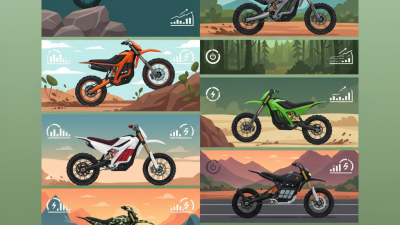
Electric dirtbikes are not one uniform category. Lightweight models suit youth training, short practice sessions, and controlled private tracks. Mid-weight bikes fit recreational trail riding, where manageable torque matters more than peak speed. Full-size competition models need stronger suspension, larger batteries, and better thermal control. They can feel demanding in tight forest sections.

The International Energy Agency’s Global EV Outlook 2024 reports more than 9 million electric two- and three-wheelers were sold worldwide in 2023. Most sales occurred in China. However, the report does not separate electric dirtbikes from scooters or road motorcycles. That limitation matters. Buyers should not treat broad two-wheeler statistics as direct evidence for off-road performance.

Use the riding environment to narrow your choice. A compact battery may work for a 45-minute training loop, but it can disappoint during remote trail rides. Check claimed range against elevation, rider weight, temperature, and terrain. Manufacturers often test under favorable conditions. Real trails are less polite. Deloitte’s 2024 Global Automotive Consumer Study also identifies charging access as a continuing concern for electric-vehicle buyers. For dirtbike owners, this means checking removable-battery weight, charging voltage, and local electrical standards before purchase. Competition riders should review applicable event rules, while recreational users need to confirm where off-road riding is permitted. Noise reduction is valuable, but it does not replace responsible land use.
Comparing Motor Power, Battery Range, and Charging Requirements

How to Choose the Best Electric Dirtbikes for Global Buyers

Motor power should match terrain, rider weight, and riding purpose. A lower-output motor feels predictable on flat trails and uses less battery. Higher power helps on steep climbs, loose gravel, and sandy ground. However, peak wattage can mislead buyers. Continuous power shows what the motor can sustain without overheating. Check both figures, along with torque and riding modes. A softer mode can improve control for beginners.

Battery range depends on more than the advertised distance. Speed, tire pressure, rider weight, temperature, and elevation all affect consumption. Cold weather can reduce usable range noticeably. In practical testing, riding slowly on firm ground may approach the claimed figure. Muddy hills may cut it sharply. Leave a reserve for the return trip. Range estimates are useful, but never perfect.

Charging requirements deserve careful attention across countries. Confirm the charger’s input voltage and plug type before ordering. Some systems accept broad voltage ranges, while others need a compatible local charger. Use a grounded outlet with enough circuit capacity. Avoid damaged extension cords and unapproved adapters. Charging should happen in a dry, ventilated area, away from direct heat. Fast charging saves time, but it may increase battery stress over years. A removable battery can simplify apartment charging, though it adds weight and connection points. Check replacement availability, charging temperature limits, and warranty terms in your region. Small details matter.

How to Choose the Best Electric Dirtbikes for Global Buyers - Comparing Motor Power, Battery Range, and Charging Requirements

Representative electric dirtbike specifications by performance class

Performance Class Typical Use Continuous Motor Power Peak Motor Power Battery Configuration Typical Claimed Range Practical Off-Road Range Standard Charging Input Typical Full Charge Time Key Buying Consideration
Entry Trail Light trail riding, training, private land, and short recreational trips 1.5–3 kW 3–5 kW 48–60 V; approximately 1.5–3.0 kWh 40–80 km under moderate conditions 20–45 km 100–240 V AC household supply; 3–8 A charger 4–8 hours Lowest purchase and running cost, but limited hill-climbing ability and shorter range
Lightweight Trail Mixed recreational trails, beginner enduro, and commuting on private roads 3–6 kW 6–10 kW 60–72 V; approximately 2.5–4.5 kWh 60–110 km under moderate conditions 30–65 km 100–240 V AC; 5–12 A charger 3–6 hours Good balance of weight, manageable power, and everyday usability
Performance Trail Technical trails, steep climbs, advanced recreational riding, and frequent off-road use 6–12 kW 12–20 kW 72 V; approximately 4–7 kWh 70–130 km under moderate conditions 35–75 km 100–240 V AC; 8–20 A charger 2.5–5 hours Higher thermal load and energy consumption require good cooling and battery management
Competition Enduro Racing, demanding enduro courses, deep sand, and repeated high-load acceleration 12–25 kW 20–40 kW 72–96 V; approximately 5–9 kWh 50–100 km under controlled test conditions 20–55 km 100–240 V AC; 15–30 A charger 2–4 hours Maximum acceleration and climbing performance, with shorter range during aggressive riding
Long-Range Utility Trail touring, farm or estate work, exploration, and extended low-speed riding 5–10 kW 10–18 kW 60–72 V; approximately 5–10 kWh 100–180 km at low or moderate speed 55–110 km 100–240 V AC; 8–20 A charger 4–8 hours Prioritizes battery capacity and efficiency over peak acceleration
Dual-Battery Trail Long recreational rides where charging access is limited 6–12 kW 12–22 kW 72 V; approximately 7–12 kWh, usually in two removable packs 120–220 km under moderate conditions 65–125 km 100–240 V AC; two separate chargers or a high-output charger 4–9 hours for both packs Extended range and flexible charging, but greater weight and higher purchase cost

Notes: Motor output, range, and charging time vary with rider weight, speed, terrain, temperature, tire pressure, payload, battery age, and riding style. Claimed range is normally measured under controlled or moderate conditions; practical off-road range is a more conservative planning estimate. Charging times assume a battery starting near empty and a compatible charger connected to a stable electrical supply. Buyers should also verify local rules for road registration, maximum power, lighting, noise, battery transport, and charger plug compatibility.

Evaluating Frame Design, Suspension, Brakes, and Safety Features

How to Choose the Best Electric Dirtbikes for Global Buyers

Frame design should match the rider’s terrain, weight, and maintenance access. A rigid alloy frame can feel precise on hard trails, but it transmits sharp impacts. A well-braced frame with controlled flex may feel calmer on rocks and loose soil. Check weld quality, steering stops, footpeg mounts, and battery protection underneath. I have seen attractive frames hide weak cable routing. That detail matters.

Suspension deserves more than a travel number. Look for adjustable preload, rebound control, and seals that resist dust and mud. The fork should compress smoothly without diving deeply under braking. Rear suspension should keep the tire planted over repeated bumps. Test both ends separately, if possible. A dirtbike that feels plush once may overheat its damping during a long descent.

Brakes and safety systems require measurable checks. Hydraulic disc brakes, strong lever feel, and heat-resistant rotors are useful for heavier electric machines. The CPSC’s 2023 micromobility report estimated 233,870 emergency-department-treated injuries from 2017–2022, covering e-bikes, e-scooters, and hoverboards. That wider category highlights the need for dependable control systems. NHTSA reports that motorcycle helmets reduce fatal injury risk by about 37% for operators and 41% for passengers. Choose certified head protection, gloves, boots, and impact-resistant clothing. Also inspect the kill switch, brake cutoff, lighting, battery enclosure, thermal protection, and chain guard. Some specifications look impressive but remain unverified. Ask for test documentation, replacement-part availability, and service procedures in your country.

How to Choose the Best Electric Dirtbikes for Global Buyers

Recommended evaluation weighting for a balanced electric dirtbike purchase. Braking and safety receive the highest priority because they directly affect rider control, stopping performance, and risk reduction.

Frame design should provide structural strength without unnecessary weight. Suspension performance should match terrain and rider load. Hydraulic disc brakes, dependable brake modulation, lighting, a reliable battery-management system, and clearly accessible controls are important safety considerations for global buyers.

Checking Legal Standards, Certifications, and Regional Import Rules

Choosing an electric dirtbike for international use starts with its legal category, not its top speed. An off-road model may be restricted to private land, while a road-approved model can require lights, reflectors, mirrors, brakes, and an identification number. I have seen buyers focus on battery range and overlook registration rules. That mistake can delay delivery or prevent lawful use.

Check the destination authority’s current requirements before paying a deposit. In the European Union, verify applicable conformity documentation and battery transport records, while other regions may request different certificates. Confirm that the charger matches local voltage and plug standards. Ask for test reports covering electrical safety, electromagnetic compatibility, and battery performance. UN 38.3 transport testing may also matter when shipping lithium batteries. Documents should show the exact model, battery type, and production version.

Import rules can change by country, state, or province. Customs may require commercial invoices, tariff codes, origin details, and proof of ownership. Some areas impose age limits, engine-equivalent power rules, insurance requirements, or restrictions on public trails. Check whether the vehicle needs inspection after arrival. A seller’s statement that a bike is “globally certified” is not enough. Certification rarely travels perfectly across borders. I would also confirm warranty support and replacement-part procedures locally, because a legally compliant bike is still a poor choice if essential parts cannot arrive.

Choosing Reliable Brands, Support Services, and Total Ownership Costs

Choosing an electric dirtbike for international use requires more than comparing motor power. The IEA’s Global EV Outlook 2024 identifies electric two- and three-wheelers as the largest electric vehicle market by sales volume. That growth makes support quality increasingly important. Ask whether the seller provides local technicians, clear repair manuals, and replacement parts with documented delivery times. A polished website is not enough.

Look for a written warranty covering the battery, controller, motor, and charger separately. Check exclusions for water, impact, storage, and competition use. Battery health should be measured, not merely promised. BloombergNEF’s Lithium-Ion Battery Price Survey 2024 reported an average global pack price of 115 dollars per kWh, down from 139 dollars in 2023. That decline may reduce future replacement costs, but small-volume off-road packs can remain expensive. Shipping is another variable.

Calculate the total ownership cost before ordering. Include charging equipment, tires, brake pads, suspension service, software updates, import duties, and battery transport. A cheaper bike may become costly when a controller waits six weeks at customs. Confirm charging voltage compatibility and local certification requirements. Keep invoices and serial numbers.

Support can fail.

I would also inspect the service network indirectly. Ask for two recent customer references, parts availability records, and a realistic repair timeline. Some sellers promise global coverage but outsource every repair. That is not automatically bad, yet accountability becomes unclear. The Global EV Outlook 2024 also emphasizes charging access as a key adoption factor, so buyers should verify usable charging near storage and riding areas.