10 Best Moto Track Suppliers for Global Buyers
Choosing among the 10 Best Moto Track Suppliers for Global Buyers requires more than comparing prices. A reliable supplier should understand racing surfaces, rider safety, drainage, maintenance, and international delivery. Moto Track projects can involve compacted soil, asphalt, modular barriers, timing systems, lighting, and workshop facilities. Each component affects performance and operating costs.
Industry data supports careful supplier evaluation. Grand View Research’s Motorcycle Market Size, Share & Trends Analysis Report identifies continued global motorcycle demand, especially across Asia-Pacific and emerging markets. This growth increases interest in professional training and racing facilities. The World Bank’s Logistics Performance Index 2023 also shows why customs handling, shipment visibility, and delivery reliability matter. A low quotation means little when replacement barriers arrive late.
This guide compares suppliers through practical evidence. We examine product quality, engineering capability, project experience, certifications, installation support, and after-sales service. FIM safety principles, ISO 9001 quality systems, material test records, and documented load ratings deserve close attention. Real project photos help, but they are not enough. Ask for references, maintenance schedules, drainage drawings, and warranty terms.
No ranking is perfect. Supplier websites can look polished while technical documents remain vague. That is a warning sign. Global buyers should also verify local standards, climate suitability, import requirements, and emergency access before signing contracts. The strongest Moto Track supplier is not always the cheapest. It is the partner that communicates clearly, tests responsibly, and still answers difficult questions after delivery.
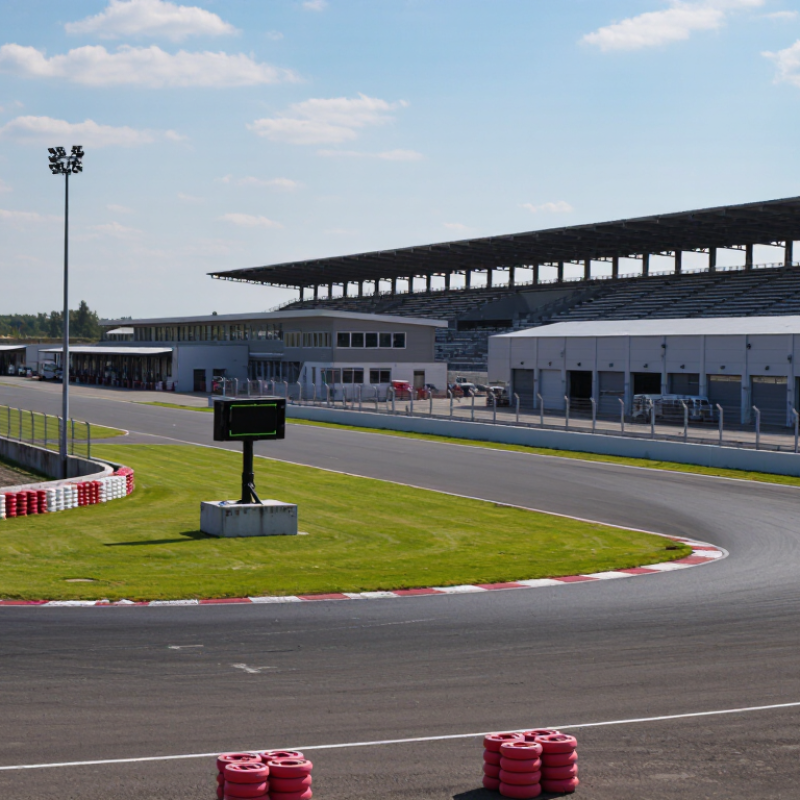
Global Moto Track Supplier Market: Regions, Demand, and 2024 Industry Data
The global moto track supplier market is shaped by regional riding culture, replacement demand, and motorsport investment. Fortune Business Insights valued the global motorcycle market at about USD 123.3 billion in 2024. Asia-Pacific remains the largest demand center, supported by dense cities, affordable mobility, and extensive two-wheeler use. Buyers in Europe often prioritize certified safety equipment, precise fit, and durable materials. North American demand leans toward performance upgrades, training facilities, and premium track support products.
Track suppliers must read these differences carefully. A warehouse near major ports can shorten delivery times, while local stock reduces delays for tires, brake components, protective barriers, and maintenance tools. Grand View Research identifies Asia-Pacific as a leading motorcycle market region, with continued growth linked to urban transport and rising disposable income. However, public reports rarely separate professional track supply from general motorcycle sales. That is a serious data limitation.
Procurement teams should compare product testing, batch consistency, warranty terms, and technical documentation. A low quoted price may hide higher freight, replacement, or compliance costs. I have seen specifications look impressive but fail during heat, rain, or repeated impact. That lesson is easy to overlook. Demand is also uneven: seasonal racing calendars can create sharp order peaks, while smaller markets may require flexible minimum quantities. Supplier evaluations should combine published market data with delivery records, sample testing, and direct facility audits.
Ranking Criteria: FIM Homologation, ISO 9001, EN 17092, and Safety Metrics
Choosing among the 10 Best Moto Track Suppliers for Global Buyers requires more than comparing prices. FIM homologation is a key checkpoint for racing equipment, but buyers should verify the exact product, approval scope, and current validity. A supplier may hold valid documents for one suit, not its entire catalog. That distinction matters.
ISO 9001 indicates a structured quality management system, not automatic product safety. Ask for recent audit information, traceability records, and corrective-action examples. EN 17092 testing can reveal protection levels for motorcycle garments, including abrasion resistance, seam strength, and impact protection. Safety metrics should also include failed-test rates, return patterns, inspection frequency, and transparent incident reviews. In my experience, clear documentation often predicts better cooperation after shipment. Still, paperwork can be incomplete. Independent verification remains necessary.
Tips: Request certificate numbers and match them with issuing bodies. Check labels, test dates, material specifications, and size consistency. Ask how suppliers handle damaged samples and production changes. A practical test may include inspecting stitching, armor placement, zipper function, and ventilation panels. Do not rely on polished photographs. Some evaluation systems overvalue certification and undervalue fit, usability, or after-sales response. A supplier that welcomes technical questions is usually easier to assess, although this is not proof of consistent performance. Keep written records of every claim, sample result, and revision.
10 Best Moto Track Suppliers for Global Buyers
Ranking framework based on FIM homologation, ISO 9001, EN 17092, and documented safety metrics
This procurement model assigns the highest weight to product-level compliance and test evidence. FIM homologation is relevant to products approved for FIM competition use, ISO 9001 evaluates the quality-management system, and EN 17092 defines performance classes for motorcycle protective garments. Safety evidence should be verified through applicable abrasion, tear, seam, and impact-protection test reports. The percentages represent evaluation weights, not claims about any individual supplier.
Supplier Profiles: Product Range, Production Capacity, and Quality Performance
Choosing among the 10 best moto track suppliers requires more than comparing prices. Product range matters first: track motorcycles, racing fairings, braking systems, suspension kits, tires, telemetry, and replacement parts should match your circuit needs. Grand View Research valued the global motorcycle market at about USD 106.8 billion in 2023, showing strong demand but also intense supplier competition. A useful profile should record model coverage, material specifications, customization options, and spare-part availability.
Production capacity needs evidence. Ask for monthly output, lead times, tooling ownership, and peak-season allocation. A supplier may advertise large capacity yet outsource critical machining. That deserves attention. Quality performance should include defect rates, batch inspection records, warranty data, and test results under heat and vibration. ISO 9001 certification can indicate controlled processes, but it does not prove track durability. Request sample inspection reports and traceability records for frames, fasteners, and composite components.
Tips: Compare three recent production batches, not one showroom sample. Check whether quoted capacity includes subcontractors. Ask for independent test evidence. A clean factory tour helps, but it can still miss hidden rework. Reviewers should also examine delivery history, communication speed, and corrective-action records. These details often reveal more than polished catalogs. Be careful with impressive numbers; capacity without consistent quality creates expensive delays.
Due Diligence: Factory Audits, Compliance Records, and Total Cost Analysis
Choosing moto track suppliers requires more than comparing unit prices.
I request factory licenses, ownership details, recent audit reports, quality certificates, and corrective-action records. OECD due-diligence guidance recommends a risk-based process, not a one-time document check. A clean audit is not proof. Records may be outdated, translated poorly, or prepared for inspection.
I also verify worker safety, wage systems, environmental controls, and material traceability.
The ILO and UNICEF estimate that 160 million children were in child labour in 2020, including 79 million in hazardous work.
This makes supplier interviews and unannounced follow-up checks valuable. Photographs help, but production-floor evidence matters more. Small gaps deserve attention.
Total cost analysis should include tooling, minimum order quantities, testing, packaging, freight, duties, currency movement, defect rates, warranty exposure, and inventory financing.
The 2023 World Bank Logistics Performance Index reports that goods can take about 44 days to move through international supply chains. Delays can erase a low factory quote quickly.
I use a landed-cost worksheet and compare three scenarios: normal delivery, late delivery, and rejected batches. My spreadsheet is never perfect. That is the point. Suppliers should explain assumptions, not simply approve the final number.