Leave Your Message

Who Are the Top 10 Electric Go Kart Manufacturers in China?

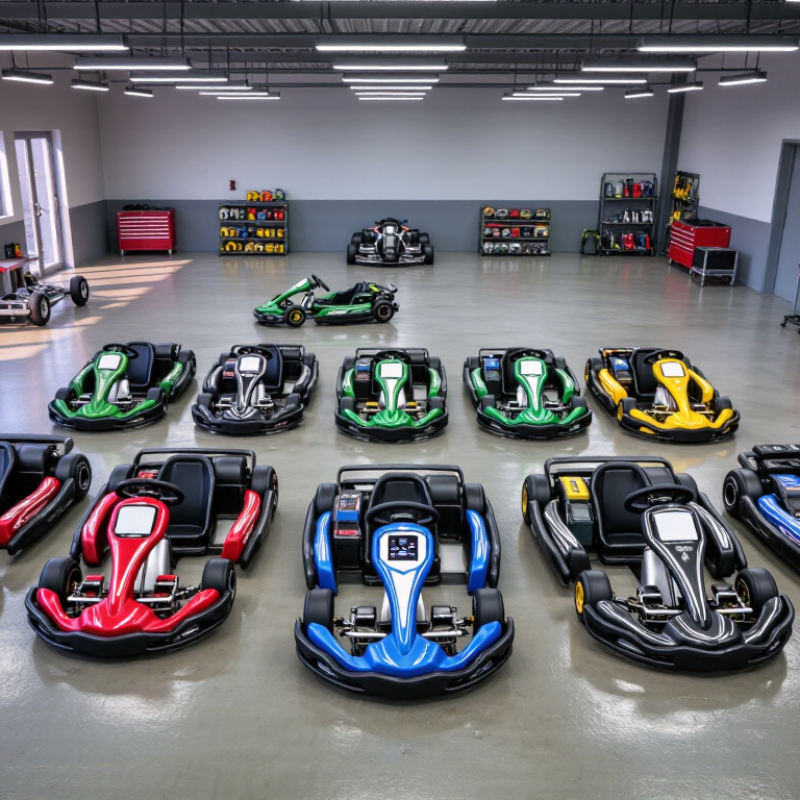
China is a significant source of electric karting equipment, with manufacturers serving leisure venues, rental operators, and private buyers. Their products can look similar in a catalog, yet differ in frame construction, motor output, battery capacity, braking systems, and replacement-part support. Small details matter. A charger that suits daily operation, or a readily available brake component, can affect how smoothly a fleet runs.

This guide introduces ten Chinese Electric Go-Kart manufacturers and the features that may help buyers compare them. The overview considers product range, customization options, manufacturing information, export experience, and after-sales support. These are useful starting points, not guarantees of performance. A company’s published specifications should be checked against current models, operating conditions, and service arrangements before a purchase. Ask for details such as battery chemistry, charging time, rated load, and parts availability. Where possible, review product documentation and request a practical demonstration.

No single ranking fits every buyer. That comparison is useful, but not perfect. A venue planning indoor rentals may value easy maintenance and predictable charging, while a family buyer may focus on speed control and fit. The manufacturers below offer different approaches, so the best match depends on the intended use, budget, and support available after delivery. Careful questions can reveal more than a product photo.
Who Are the Top 10 Electric Go Kart Manufacturers in China?

Electric Go-Karts Explained: 48–72 V Powertrains, Motors, and Controllers

When comparing the top electric go-kart manufacturers in China, examine the powertrain before the body design. Most recreational models use 48, 60, or 72-volt systems. A 48 V setup often suits younger drivers and lighter chassis. A 60 V system can provide stronger acceleration without excessive battery weight. A 72 V system supports higher sustained power, but it demands better insulation, cooling, and battery management.

Motor choice changes the driving character. Brushless DC motors offer efficient operation and limited routine maintenance. Their rated power matters, but peak output can be misleading. Ask for continuous power, torque curves, and tested operating temperatures. A 5 kW motor may feel weak if the controller limits current sharply. It may feel aggressive with a high-current controller. That difference is easy to miss.

The controller translates battery energy into wheel movement. A quality unit manages current, throttle response, regenerative braking, and thermal protection. Look for programmable current limits and clear fault records. These features help manufacturers tune acceleration for different drivers. Battery cells, connectors, cables, and fuses also deserve inspection. Small components can create large failures.

Manufacturing data should include endurance testing, braking tests, and sample-based quality checks. Some specifications look impressive on paper. Real track performance can disagree. Manufacturers that provide test evidence, service procedures, and replacement-part support usually offer greater purchasing confidence. Still, no supplier is perfect, and published figures should be verified under actual load.
How to Rank China’s Top 10 Manufacturers by Products, Certifications, and Export Reach

Who Are the Top 10 Electric Go Kart Manufacturers in China?

Ranking China’s top ten electric go-kart manufacturers requires more than checking production photos. Product quality should carry the greatest weight. Inspectors can compare frame welding, steering response, braking distance, battery protection, and charger reliability. A strong manufacturer should offer several models, adjustable speed modes, replacement parts, and clear maintenance instructions. Factory testing matters too. A kart that performs well on a showroom floor may struggle after months of rental use.

Certifications provide the next layer of trust. Auditors should verify current documents, test reports, and factory quality procedures, rather than accepting copied certificates. ISO 9001 can indicate controlled processes, while market-specific safety documentation supports responsible sales.

Export reach also deserves careful review. Shipment records, overseas service partners, packaging quality, and response times reveal practical experience. I would score these areas with transparent weights, such as 45% products, 30% certifications, and 25% export performance.

However, public data is incomplete. Some smaller factories may have strong engineering but limited online evidence. That weakness should lower confidence, not automatically prove poor quality. Rankings should be reviewed after sample testing, customer interviews, and a direct factory audit. The results may change.

Profiles of China’s Top 10 Electric Go-Kart Manufacturers and Their Key Models

Who Are the Top 10 Electric Go-Kart Manufacturers in China?

Profiles of China’s Top 10 Electric Go-Kart Manufacturers and Their Key Models

China’s top ten electric go-kart manufacturers serve different driving needs. Manufacturer One focuses on compact rental karts, using the Swift 48V model for indoor tracks. Manufacturer Two builds children’s recreational karts, including the Mini Trail series with adjustable pedals. Manufacturer Three supplies racing-oriented products, such as the Raptor 72V, with stronger acceleration and hydraulic braking. Manufacturer Four produces two-seat recreational karts, while its Duo Cruiser model offers a wider chassis and rear storage. Manufacturer Five specializes in off-road designs, including the Ridge 4x4, fitted with larger tires and protective tubing.

Manufacturer Six develops lightweight youth karts, represented by the Junior Sprint, which uses a lower seat position. Manufacturer Seven makes commercial fleet models, including the Fleet Pro, designed for repeated daily charging. Manufacturer Eight offers customizable chassis platforms, allowing buyers to select battery capacity, seat layout, and body panels. Manufacturer Nine focuses on utility-style electric karts, with the WorkRunner model supporting small cargo loads. Manufacturer Ten produces premium track karts, including the Apex GT, with digital displays and adjustable steering geometry.

Real evaluation requires more than appearance. Buyers should inspect battery certifications, motor ratings, charger protection, weld quality, and replacement-part availability. A test ride should measure braking distance, turning stability, noise, and heat after repeated laps. Some published specifications may reflect ideal conditions, not everyday use. That difference matters. Factory audits and sample testing remain necessary before large orders.

Key Specification Ranges of Electric Go-Kart Models from China’s Leading Manufacturers

The chart summarizes commonly published specifications for electric go-kart configurations made in China, grouped by intended use rather than by company or brand. Higher-performance models generally combine greater motor output and speed with shorter continuous operating time.

Comparing Battery Voltage, Runtime, Charging, and Vehicle Specifications

Choosing the top ten electric go-kart manufacturers in China requires more than comparing advertised speed. Battery voltage is a practical starting point. A 48V system often supports stronger acceleration than a 24V system, but motor output and controller quality also matter. A 60V platform may deliver more power, yet it can increase weight, cost, and charging requirements.

Runtime should be measured under real riding conditions. A kart carrying a 75-kilogram driver on a flat track will perform differently from one climbing slopes. Ask manufacturers for battery capacity in amp-hours, test temperature, driver weight, and average speed. A 48V 40Ah battery provides about 1.92 kilowatt-hours before conversion losses. Actual riding time may be shorter. Advertised figures are not always generous.

Charging details deserve equal attention. Confirm charger output, charging duration, battery management protection, and replacement procedures. Lithium battery packs may charge in four to eight hours, depending on capacity and charger settings. Lead-acid packs usually weigh more and need longer recovery periods. Vehicle specifications should include wheelbase, ground clearance, braking type, tire size, frame material, payload, and controller limits. Request test reports, inspection records, and sample units before placing a large order. I would also verify weld quality personally; photographs can hide uneven joints. One overlooked detail remains common: a powerful motor means little when the tires lose grip.

Safety and Compliance Benchmarks: EN 16230-1 and Essential Buyer Checks

When comparing electric go-kart manufacturers in China, treat EN 16230-1 as a practical safety benchmark, not a marketing phrase. It addresses safety requirements and test methods for leisure karts and related facilities. Ask which edition was used and request the relevant test reports. A supplier’s general statement of compliance is not the same as evidence for the exact model you plan to buy.

Inspect the kart’s real-world details. Check braking performance, steering response, seat belts, guards around moving parts, and accessible emergency-stop controls. Ask how speed settings are limited for different driver groups, and whether the controls can be changed without authorization. Small details matter. Request battery protection information, charging instructions, and maintenance intervals. A neat specification sheet cannot show how a kart behaves after repeated track use.

Also check whether the track layout, barriers, signage, and operating procedures match the intended use. Ask for manuals, inspection records, and clear instructions for routine checks. If possible, observe a demonstration and note braking distance, unusual vibration, or loose fittings. Ask for proof. Keep in mind that standard-based testing does not replace a site-specific risk assessment, and a document may not cover every configuration. I would verify the supplied kart’s model number against its reports; this step is easy to overlook.

Who Are the Top 10 Electric Go Kart Manufacturers in China? - Safety and Compliance Benchmarks: EN 16230-1 and Essential Buyer Checks
No. Buyer benchmark Evidence to request Practical acceptance check Assessment status
1 Applicability of EN 16230-1 Test report identifying the exact kart model, intended use, test laboratory, standard edition and any amendments applied. Confirm the cited edition is current and applicable to the vehicle and operating conditions being purchased; check that the report covers the supplied configuration. Verify for each supplier
2 Braking performance Test results and technical details for the service brake, parking or holding function where fitted, and relevant wear or maintenance limits. Check that stopping and holding performance has been assessed for the kart’s intended load, speed and surface conditions, and that inspection intervals are documented. Verify for each supplier
3 Speed control and operating limits Controller settings, maximum-speed specifications, adjustment instructions and details of any operator-accessible speed-limiting function. Confirm the delivered kart can be configured for the track’s risk assessment and that settings cannot be changed unintentionally during normal operation. Verify for each supplier
4 Emergency stop and power isolation Electrical schematics, emergency-stop operating instructions and the manufacturer’s description of how drive power is disabled. Test the stop and isolation functions during acceptance; confirm reset and restart behavior is explained and consistent with the operating procedure. Verify for each supplier
5 Electrical and battery protection Battery and charger specifications, protective-device details, wiring diagrams, charging instructions and relevant test documentation. Check protection against foreseeable electrical and thermal hazards, secure connections, charger compatibility and clear instructions for damaged batteries. Verify for each supplier
6 Mechanical integrity and guarding Drawings or inspection records for the frame, steering, wheels, fasteners and guards around moving or hot components. Inspect the production unit for sharp edges, exposed pinch points, loose parts and damage; compare the unit with the tested model configuration. Verify for each supplier
7 Driver restraint, seating and accessibility Seat and restraint specifications, adjustment limits, user-size guidance and instructions for safe entry and exit. Confirm the kart fits its stated user group and that restraints, seat adjustment and controls can be used correctly without interfering with steering or braking. Verify for each supplier
8 Warnings, labels and user information Photos or artwork of vehicle labels, operator manual, maintenance schedule and safety instructions in the languages required at the operating site. Check that warnings are legible and durable and that instructions identify operating limits, pre-use checks, charging precautions and maintenance tasks. Verify for each supplier
9 Production consistency and traceability Quality-control plan, serial-number system, inspection records and written confirmation of changes made after testing. Require traceability from the delivered kart to its configuration and production batch; ask the supplier to disclose safety-relevant design changes. Verify for each supplier
10 After-sales support and spare parts Warranty terms, parts list, service instructions, spare-parts availability and process for reporting safety issues or recalls. Confirm the supplier can provide critical parts and technical support throughout the planned service life and has a documented issue-escalation process. Verify for each supplier

Important: This is a ten-point screening framework, not a verified ranking of Chinese manufacturers and not a claim that any specific supplier or kart complies with EN 16230-1. EN 16230-1 covers safety requirements and test methods for leisure karts; buyers should confirm the current edition, scope and any applicable local requirements with the testing body and their compliance adviser. Request model-specific evidence before purchase.