How to Choose an Electric Go-Kart for Your Business?
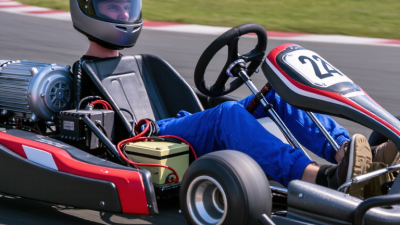
Choosing an Electric Go-Kart for a business requires more than comparing speed, battery size, and purchase price. The right vehicle must fit your track, customer profile, operating hours, and maintenance capability. A family entertainment center needs different performance from a competitive indoor racing venue. Start with evidence from your own operation. Measure average session length, peak queues, charging windows, and daily kart utilization.
Industry data supports the move toward electric mobility. The International Energy Agency’s Global EV Outlook 2024 reported more than 14 million electric cars sold worldwide in 2023, representing about 18% of total car sales. Although go-karts are a smaller segment, this trend indicates improving battery supply chains and wider technical experience. Market research from Grand View Research and IMARC Group also identifies growing demand for electric recreational vehicles, driven by lower local emissions, reduced noise, and simpler drivetrain maintenance.
Noise matters.
For a business, an Electric Go-Kart should deliver consistent acceleration, predictable braking, and dependable battery performance across repeated sessions. Review independent test records, warranty coverage, charging time, replacement-part availability, and service response before signing a contract. Check whether the manufacturer provides speed-control software, emergency shut-off systems, battery diagnostics, and operator training. Relevant amusement-ride guidance, including EN 13814 and applicable local standards, should shape your safety review.
Do not trust impressive brochure numbers alone. Claimed range may change with rider weight, temperature, track gradients, and aggressive driving. We may also overvalue top speed while ignoring charging downtime. A slower kart with strong uptime can produce more paid sessions. The best choice is the model that supports safe, repeatable revenue—not merely the fastest kart in the showroom.
Define Your Business Needs and Go-Kart Operating Environment
Choosing an electric go-kart starts with your business, not the vehicle’s appearance. Map the customer experience you want to deliver. An indoor family venue needs quiet acceleration, compact turning, and predictable speed control. An outdoor track may require stronger weather protection, higher ground clearance, and hill-climbing ability. Count expected riders, daily sessions, and peak-hour demand. Do not estimate casually. Use actual booking data when available.
Your operating environment can change the decision. Measure track length, surface material, corner width, and the steepest incline. Smooth concrete stresses traction differently from dusty asphalt. Rain, heat, and cold can affect battery performance and charging time. During a site assessment, I found a seemingly suitable kart struggled near a damp corner. The issue was not motor power. Tire choice and surface drainage mattered more. That result changed our evaluation checklist.
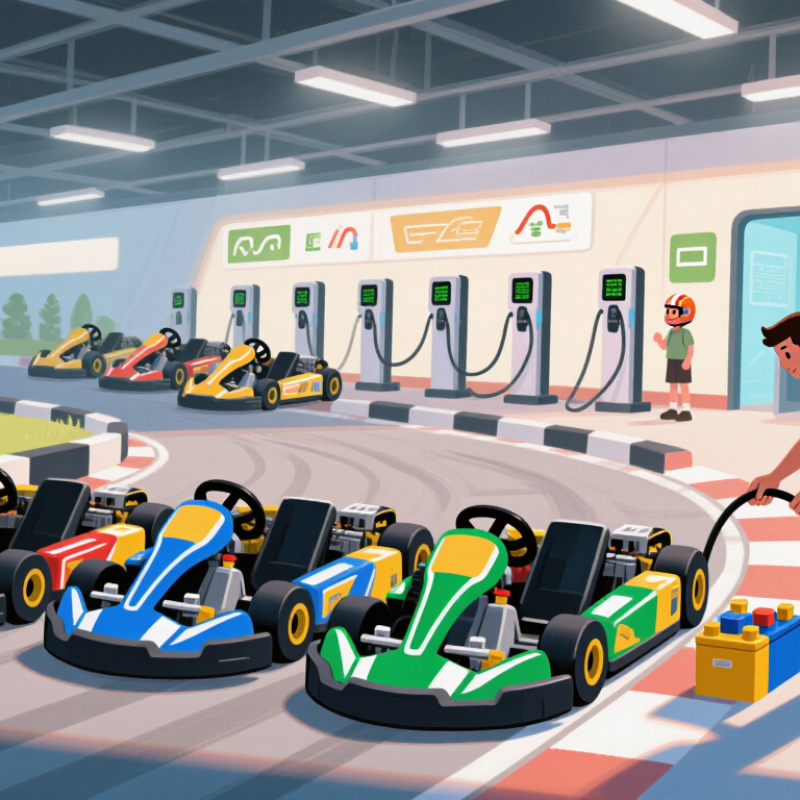
Plan charging space away from customer traffic, with ventilation and controlled access. Allow time for inspections, tire checks, brake testing, and cleaning between sessions. Maintenance is often underestimated. Ask whether staff can diagnose basic faults without specialized equipment. Also consider rider variety. Children, adults, and heavier riders create different load demands. Some assumptions will be wrong. Recheck them after a pilot day, because real usage exposes details that specifications cannot. Follow applicable safety requirements, and document operating limits clearly for every shift.
Compare Electric Go-Kart Types, Sizes, and Performance Levels
How to Choose an Electric Go-Kart for Your Business?
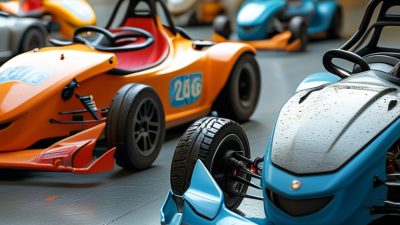
Electric go-karts usually fall into three practical groups: junior, adult, and high-performance models. Junior karts suit smaller indoor tracks and controlled training sessions. Adult karts need wider seats, stronger braking, and longer runtimes. High-performance karts require larger safety zones and more capable charging systems. Size matters more than many buyers expect. A compact kart may improve track capacity, yet limited legroom can reduce customer comfort and repeat visits.
Performance should match your track, not your ego. Entry-level karts commonly operate around 25–35 km/h, while adult rental models often reach 40–60 km/h. Faster vehicles can shorten lap times, but they also demand better barriers, supervision, and maintenance planning. The 2024 Global EV Outlook from the International Energy Agency reported an average lithium-ion battery pack price of 139 USD per kWh in 2023. That figure helps estimate battery replacement costs, although kart packs differ from road-vehicle packs. Charging also needs realistic scheduling. The U.S. Department of Energy’s Alternative Fuels Data Center notes that Level 2 charging commonly requires several hours, depending on battery size and power supply. Overnight charging may be enough. Maybe not during peak operations.
Check acceleration, tire wear, battery access, and cooling performance during a full-day trial. Ask for tested range under repeated laps, not a showroom estimate. Compare single-seat and two-seat layouts carefully; two-seat karts add capacity for families but reduce available track space. A simple spreadsheet tracking lap demand, charging time, and downtime can expose weak assumptions before purchase.
How to Choose an Electric Go-Kart for Your Business?
Typical performance comparison by kart type, size, and operating purpose
Junior karts are suitable for children and compact venues, while family and leisure models provide a balance between comfort and operating range. Rental karts generally prioritize durability and consistent runtime. Performance or track karts deliver the highest speed but may require more frequent charging and greater safety control. The figures shown are representative planning values commonly found in electric go-kart applications; final specifications should be confirmed with the supplier.
Evaluate Battery Range, Charging, and Power Requirements
Choosing an electric go-kart for business use requires more than checking its advertised speed. Battery range should match your busiest operating period, not an ideal showroom test. A vehicle may claim several hours of use, but passenger weight, hills, frequent acceleration, and hot weather can reduce that figure. Measure expected laps per charge using real track conditions. Leave a safety margin of at least 20 percent.
Charging capacity also affects daily operations. A small fleet may need overnight charging, while a busy venue may require several charging windows. Check the battery’s full charging time, charger output, connector design, and available electrical supply. Installing multiple chargers on one circuit may overload the system. Ask a qualified electrician to verify capacity before purchasing. Charging schedules should also include inspection time and battery cooling periods.
Tips:
Record energy use during a full business day. Compare battery percentage before and after each session. Keep one vehicle available for rotation. A spare battery can reduce downtime, but it adds storage and maintenance costs. Do not rely only on manufacturer estimates. I have found that real customer traffic often changes the calculation. School groups, heavier riders, and repeated stop-and-go driving can consume power faster than expected. Review the data weekly during the first month, then adjust charging times and fleet size accordingly.
Assess Total Costs, Supplier Support, and Long-Term Value
Choosing an electric go-kart for a business requires more than comparing purchase prices. Assess the total cost over several operating seasons. Include batteries, charging equipment, tires, brake parts, software, insurance, and routine inspections. A low-priced kart may become expensive when replacement parts arrive slowly.
Look beyond the quote. Ask for evidence.
Request a written service schedule and clear warranty terms. Confirm battery coverage, expected charging cycles, and repair procedures. Supplier support matters during busy weekends, when one inactive kart can reduce capacity and disappoint customers. Ask how quickly technical staff respond, where spare parts are stored, and whether staff training is included. A practical demonstration can reveal steering effort, charging access, and maintenance difficulties that brochures often hide.
Long-term value also depends on operating conditions. Compare energy use, charging time, noise levels, storage needs, and expected daily mileage. Check whether the design suits your track surface and customer mix. Speak with operators who have used similar vehicles for at least one full season. Their maintenance records may be more useful than polished sales forecasts. In my experience, suppliers sometimes estimate battery life too generously, especially under heavy commercial use. That deserves careful questioning. I would also budget for unexpected downtime, because perfect utilization is rarely realistic. Test several units with different drivers before committing, and record actual energy consumption rather than relying only on specifications.