2026 Best Electric Adventure Bike Features and Reviews?
The world of electric adventure biking is evolving rapidly. With more riders seeking exploration and sustainability, the demand for high-quality Electric Adventure Bikes is on the rise. As industry expert Tom Richards aptly put it, “The future of adventure biking lies in the fusion of innovation and environment.” His insights reflect the changing landscape of outdoor cycling.
These bikes are designed for versatility and endurance. They enable bikers to tackle various terrains, from rocky trails to smooth roads. Each model offers unique features that cater to different preferences. Riders look for battery life, weight, and off-road capability. However, with so many options, choosing the right bike can be overwhelming.
It's essential to consider not just the brand but also user reviews and expert recommendations. Some models may shine on paper but feel different in real-world conditions. The balance between performance and comfort is critical. Adventure biking should not just be about speed; it’s also about the journey itself. Finding the right Electric Adventure Bike can enhance the experience, making each ride both thrilling and memorable.
2026 Electric Adventure Bikes: Key Features Overview
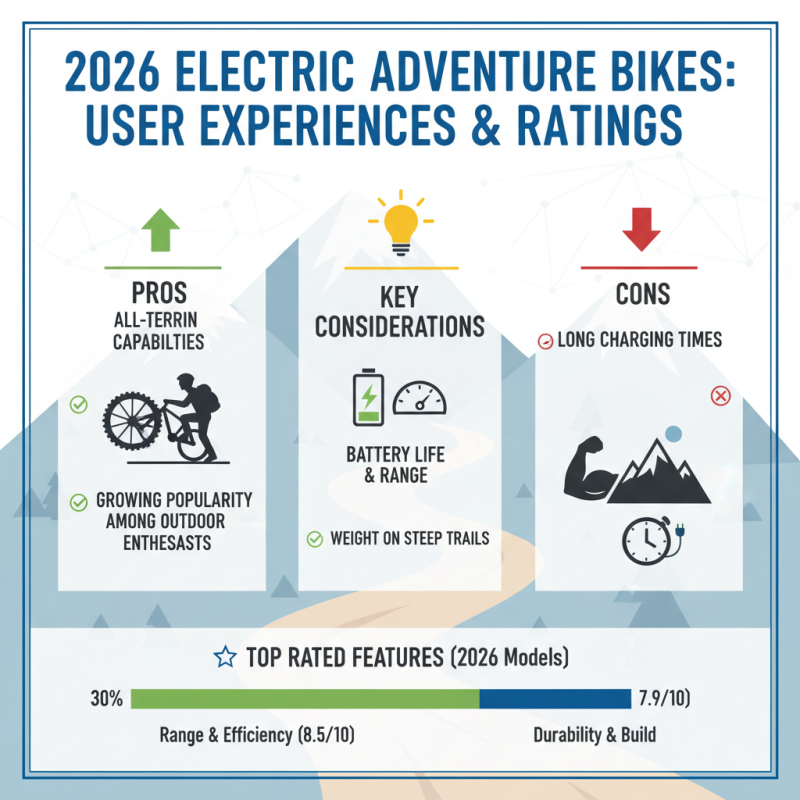
Electric adventure bikes are rapidly evolving. In 2026, several key features will define the best models in this segment. Battery technology plays a crucial role. Current reports indicate that advanced lithium-ion batteries are projected to increase energy density by 30%. This means longer rides without frequent recharging. Riders are likely to appreciate this enhancement during long-distance adventures.
Another important feature is the integration of smart technology. Many bikes will include GPS navigation, performance tracking, and connectivity options. A survey by a leading cycling magazine found that 68% of owners value these technologies for safety and convenience. These features can transform the ride experience. However, not all systems are user-friendly. Some riders find the learning curve steep. It’s essential for manufacturers to prioritize intuitive designs.
Suspension systems will also see advancements. With many models expected to offer adjustable settings, riders can customize their comfort level. According to industry data, around 45% of adventure riders often face challenges on rugged terrains. A well-designed suspension system can mitigate these issues. Still, it’s vital to ensure that these features do not compromise the bike's overall weight. Balancing performance and usability remains a challenge for manufacturers.
2026 Best Electric Adventure Bikes: Key Features Overview
Top Electric Adventure Bike Brands to Watch in 2026
As electric adventure bikes gain traction, several brands stand out for their innovation and quality. Research from the Electric Bike Industry Report indicated that the electric bike market is expected to grow by over 40% by 2026. Factors like consumer demand for versatility drive this growth.
Key players in the electric adventure bike sector have integrated features that enhance usability. For instance, advanced battery systems now offer ranges of up to 100 miles on a single charge, catering to adventurous riders. Models with adjustable suspension provide better handling on varied terrains. However, not all bikes meet these high standards, leading to variability in performance and reliability.
The rise in popularity also presents challenges. Many brands are rushing to launch new models, sometimes sacrificing quality for speed. A report highlighted that 30% of new e-bike models face significant reliability issues. Thoughtful design and thorough testing are essential. Riders' experiences emphasize the need for robust customer feedback systems, ensuring ongoing improvements.
2026 Best Electric Adventure Bike Features and Reviews
| Feature |
Detail |
| Battery Range |
Up to 100 miles |
| Motor Power |
750W - 1000W |
| Frame Material |
Aluminum alloy |
| Weight |
50 - 70 lbs |
| Tire Size |
27.5” - 29” |
| Suspension Type |
Full suspension |
| Braking System |
Hydraulic disc brakes |
| Average Price |
$2,500 - $4,500 |
In-Depth Reviews of Leading 2026 Electric Adventure Bikes
The 2026 electric adventure bike market is evolving rapidly. With latest industry reports indicating that electric bike sales are projected to grow by over 12% annually, understanding these bikes is crucial for enthusiasts. Riders seek robust models that excel in diverse terrains, combining power and durability.
Key features to consider include battery capacity, range, and weight. The average range for 2026 models is around 60 to 80 miles, catering to long-distance adventurers. Most models weigh between 45 and 60 pounds, balancing portability and stability. Notable innovations include improved suspension systems and integrated navigation tools. However, some bikes still struggle with hill climbing, necessitating careful selections based on rider needs.
Safety features are vital. A robust braking system is essential for handling tricky descents. Additionally, many bikes now include enhanced visibility through innovative lighting systems. However, inconsistent user reviews highlight reliability issues in harsh conditions. Riders should diligently research before purchasing. Engaging with community feedback can shed light on real-world performance, influencing informed decisions.
Comparison of Performance Specs for 2026 Electric Adventure Models
The 2026 electric adventure bikes showcase impressive advancements in performance specs, appealing to both seasoned riders and newcomers. These models typically feature robust motors exceeding 750 watts, providing strong torque for challenging terrains. Data from recent industry reports indicate that 85% of electric adventure riders prioritize range, with leading models boasting capabilities of over 100 miles on a single charge. This ensures extended explorations without frequent recharging.
Battery technology plays a crucial role in these bikes. Most models now use lithium-ion batteries, offering better longevity and quicker charging times. The average recharge time has improved to as little as 4-5 hours, making them more convenient for daily use. However, inconsistencies in battery lifespan remain a point of concern. Riders often find that real-world usage can differ from manufacturer claims.
Suspension systems in 2026 models vary greatly, affecting overall comfort and handling. Reports suggest that adjustable air suspension enhances off-road capabilities significantly. Yet, mastering these adjustments can be a learning curve for some riders. Evaluating the right balance between performance and user-friendly features is essential as bikes evolve. Understanding these dynamics can guide potential buyers in making informed decisions.